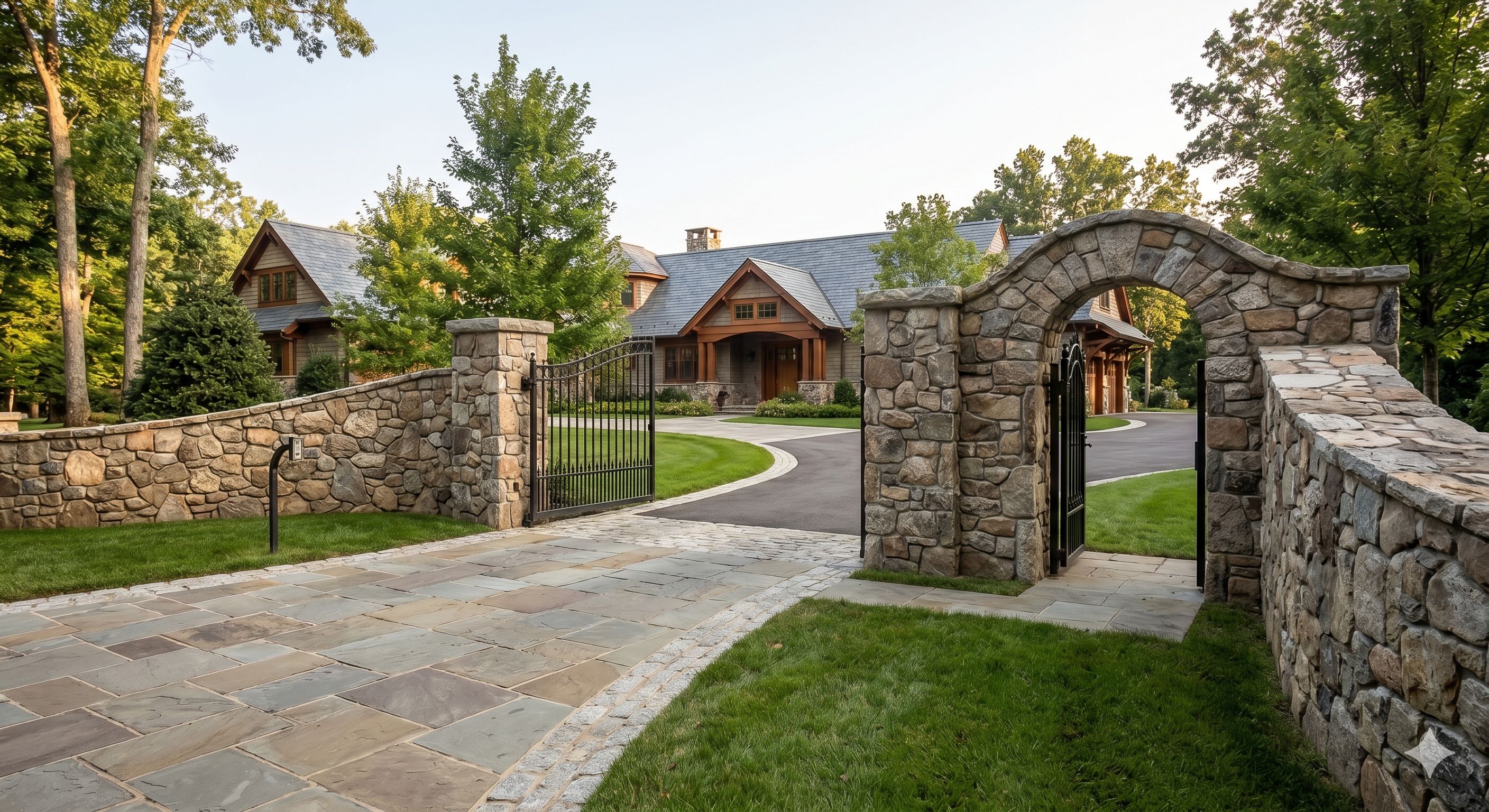
Retaining walls are the unsung heroes of hilly and sloped properties throughout Rhode Island and Massachusetts. Far from being merely decorative landscaping features, these heavy-duty structures perform a critical job every day: holding back thousands of pounds of soil while resisting gravity, water pressure, frost movement, and erosion.
In places like East Greenwich, Westerly, Newport, Cranston, and nearby coastal communities, a properly built retaining wall protects lawns, driveways, patios, walkways, and foundations. But when a wall starts to fail, it rarely collapses without warning. Most retaining wall problems begin with small signs that slowly become serious structural concerns.
If you notice any of the warning signs below, it is time to schedule a professional inspection before the repair becomes larger, more expensive, or dangerous.
1. The Wall Is Leaning, Tilting, or Bowing Forward
A retaining wall should stand firm and consistent along its full length. If the wall begins leaning forward, bulging in the center, or bowing away from the soil it is supposed to hold back, that movement is a major structural warning sign.
Forward movement often means pressure behind the wall has exceeded what the structure can safely resist. This can happen when the original base was not compacted properly, the wall was built without adequate reinforcement, or water has collected behind the structure over time.
Even a small lean deserves attention. Once a retaining wall starts moving, gravity and soil pressure usually keep pushing it in the same direction.
2. Large Cracks Are Forming in the Wall or Mortar Joints
Hairline cracks can appear naturally in some masonry materials, but wide cracks, stair-step cracking, separated mortar joints, or cracks that continue growing are different. These symptoms may indicate settlement, frost heave, poor drainage, or excessive lateral pressure behind the wall.
For stone, brick, block, or concrete retaining walls, cracking should be evaluated in context. A crack near the base may point to foundation movement. A long horizontal crack may suggest pressure from saturated soil. Multiple cracks across one section may mean that the wall is losing structural integrity.
3. Water Is Pooling Behind or Around the Retaining Wall
Water is one of the biggest threats to retaining walls in New England. When rainwater, snowmelt, or runoff collects behind a wall, it creates hydrostatic pressure. That pressure pushes outward against the structure and can eventually cause bowing, cracking, or collapse.
Common drainage warning signs include standing water near the top of the wall, wet soil that never dries, water stains on the face of the wall, missing weep holes, clogged drainage outlets, or soil washing out around the base.
A strong retaining wall is more than visible stone or block. It also needs the correct base, gravel backfill, drainage pipe, filter fabric, and grading plan.
4. Soil Is Eroding, Settling, or Pulling Away
If soil is sinking behind the wall, washing through joints, or pulling away from nearby hardscape areas, the wall may no longer be managing the load correctly. Erosion can undermine the wall from behind or below, leaving parts of the structure unsupported.
This is especially important near driveways, steps, patios, walkways, and home foundations. Once the soil starts moving, surrounding features may also shift, crack, or settle.
5. Blocks, Stones, or Caps Are Loose or Separating
Loose stones, separated blocks, failing caps, and missing mortar should not be ignored. These issues can allow water to enter deeper into the wall, increase freeze-thaw damage, and weaken the overall structure.
Sometimes a repair may involve resetting stones, repointing joints, improving drainage, or rebuilding a damaged section. In more advanced cases, the safest solution may be a partial or full reconstruction with a properly engineered base and drainage system.
When Should You Call a Masonry Contractor?
You should call a professional as soon as you see movement, widening cracks, persistent water problems, or soil loss. Waiting can turn a manageable repair into a major rebuild.
Mota Masonry & Construction provides retaining wall repair, masonry restoration, concrete work, drainage-conscious hardscaping, and structural construction services across Cranston, Providence, Warwick, Newport, East Greenwich, Fall River, Dartmouth, and nearby communities within our 25-mile service radius.
If your retaining wall is showing signs of failure, contact our team for a careful evaluation and a practical repair plan built for New England weather.