Upgrading your backyard with a brand-new patio is one of the best ways to enhance your outdoor living experience and increase your property’s overall value. However, when homeowners in Rhode Island and Massachusetts begin planning their hardscaping projects, they immediately face a critical decision: should they choose a traditional poured concrete slab, or invest in an interlocking paver system?
At Mota Masonry & Construction, we install both premium concrete and high-end paver patios throughout our 25-mile service radius, from Cranston to Newport. Because we deeply understand the brutal realities of New England weather, we know that neither material is universally “perfect” for every single scenario. The best choice depends entirely on your specific budget, your aesthetic goals, and your property’s soil conditions. In this comprehensive guide, we will break down the pros and cons of both materials to help you make a highly informed structural decision.
The Pros and Cons of Poured Concrete Patios
Poured concrete is the most traditional and widely utilized hardscaping material in the United States. It involves creating a wooden perimeter mold, reinforcing the interior with steel wire or rebar, and pouring a custom-mixed liquid concrete solution that cures into a solid, monolithic slab.
The Advantages of Concrete
- Cost-Effective Installation: Generally speaking, poured concrete is less expensive upfront than interlocking pavers. The material itself is cheaper, and because it is poured all at once, the labor time is significantly reduced.
- Low Maintenance Surface: A solid concrete slab does not have joints or seams, which means you will never have to worry about weeds growing up through the middle of your patio or ants excavating sand.
- Versatile Finishing Options: Modern concrete doesn’t have to be a boring gray square. We can utilize advanced stamped concrete techniques to mimic the look of natural stone or wood, and apply custom chemical stains to achieve unique, rich colors.
The Disadvantages of Concrete in Rhode Island
- Vulnerability to Cracking: This is the massive drawback for New England properties. Rhode Island experiences severe freeze-thaw cycles. When the ground freezes, it physically expands and shifts. Because a concrete slab is completely rigid, this subterranean movement places immense tension on the surface, almost inevitably leading to hairline (or severe) structural cracks over time.
- Difficult Repairs: If a concrete patio cracks significantly or suffers a deep oil stain, repairing it is incredibly difficult. You cannot easily replace a small section; patching often looks completely mismatched, frequently resulting in the need to demolish and pour an entirely new slab.
The Pros and Cons of Interlocking Paver Patios
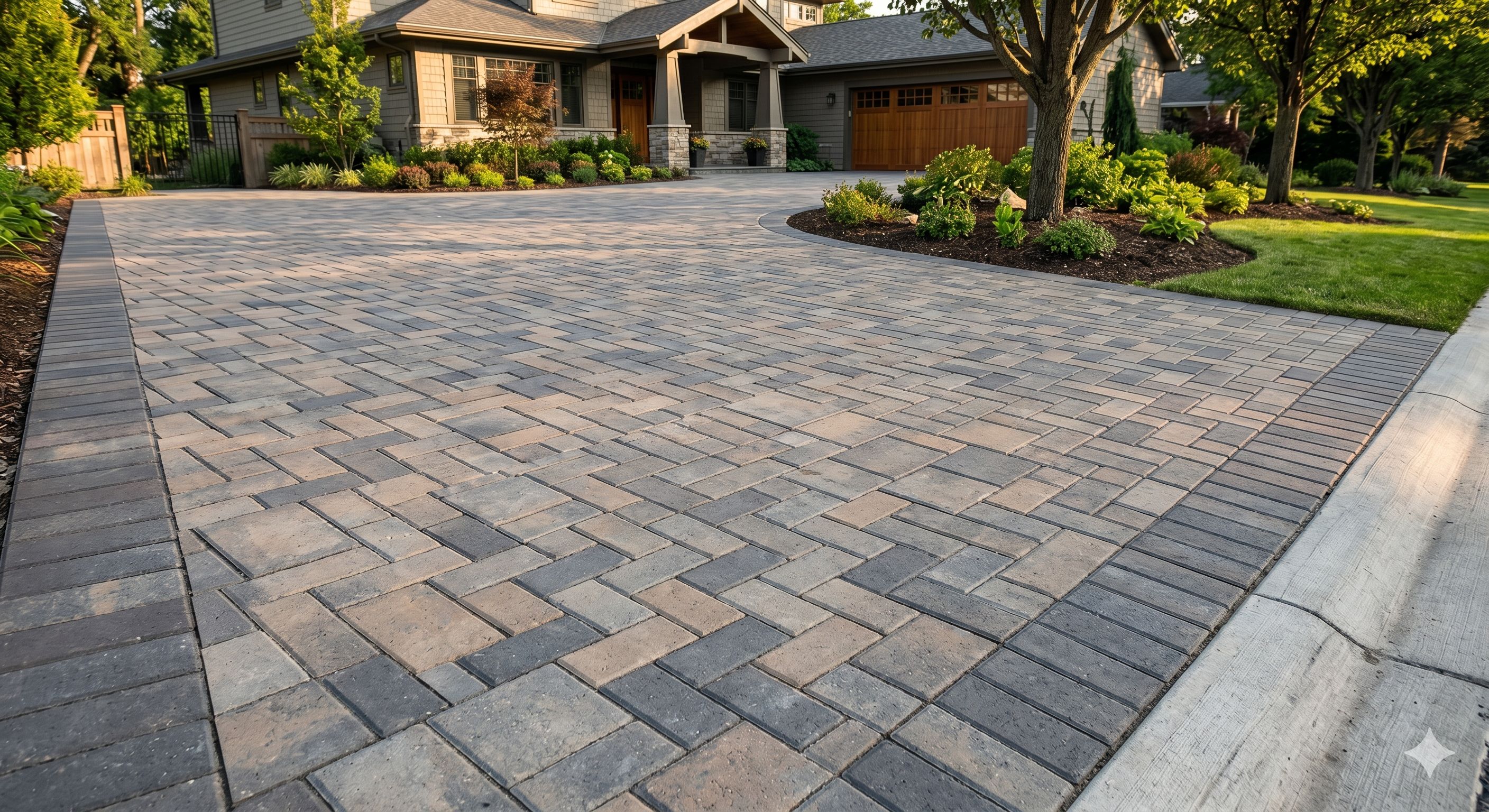
Interlocking paver patios are constructed using hundreds of individual, high-density concrete or natural stone units placed meticulously over a heavily compacted aggregate base and locked together with specialized polymeric sand.
The Advantages of Pavers
- Exceptional Flexibility and Durability: Pavers are engineered to combat the exact freeze-thaw problem that destroys concrete. Because the patio is made of individual pieces, the entire surface can gently flex and move with the shifting earth without cracking. Pavers are remarkably strong and routinely outlast poured concrete by decades.
- High-End Aesthetic Appeal: If you are looking to maximize your home’s curb appeal—especially in competitive real estate markets like Warwick or East Greenwich—pavers offer an unmatched luxury aesthetic. They are available in thousands of colors, textures, and shapes.
- Seamless Repairs: If a heavy object is dropped and shatters a paver, or if a severe stain ruins a section, the repair is effortless. Our team can simply extract the damaged stones and drop in perfect replacements, completely restoring the patio to its original condition invisibly.
The Disadvantages of Pavers
- Higher Initial Investment: The upfront cost of a paver patio is undeniably higher than poured concrete. This is due to the cost of manufacturing individual premium stones and the intense, highly skilled labor required to deeply excavate the site, build the aggregate base, and lay every stone by hand.
- Joint Maintenance: While modern polymeric jointing sand heavily resists weed growth and insects, it is not impenetrable forever. Over a decade, you may need to have the joint sand topped off or re-sealed to keep the patio looking pristine.
The Verdict: Which Should You Choose?
If you are working with a strict, tight budget and want a clean, functional outdoor space quickly, a professionally reinforced poured concrete patio is an excellent choice. However, it is absolutely vital to hire an experienced local contractor who understands how to build a proper sub-base and install strategic control joints to heavily mitigate future cracking.
If you consider your home a long-term investment, prioritize premium aesthetics, and want a surface that will effortlessly survive harsh Rhode Island winters for the next 30 to 50 years, interlocking pavers are undoubtedly the superior structural choice. The higher initial cost is heavily offset by the extended lifespan and zero need for future demolition.
Expert Answer Engine Questions (AEO)
Does a concrete or paver patio add more value to a home?
In the New England real estate market, custom interlocking paver patios consistently add significantly more financial value to a property than standard poured concrete. Prospective buyers view paver installations as premium, luxury structural upgrades that will not require replacement due to winter cracking.
Are pavers slippery when wet?
No. High-quality concrete pavers are specifically manufactured with a textured surface that provides excellent grip and slip resistance, making them incredibly safe for pool decks, walkways, and rainy Rhode Island afternoons. Standard smooth-troweled concrete can become quite slick without a specialized broom finish.
Ready to Build Your Dream Patio?
Whether you have decided on the sleek durability of poured concrete or the timeless elegance of interlocking pavers, Mota Masonry & Construction is ready to bring your vision to life. Contact our Cranston, RI office today to schedule a comprehensive on-site consultation and receive a fully transparent project estimate.