
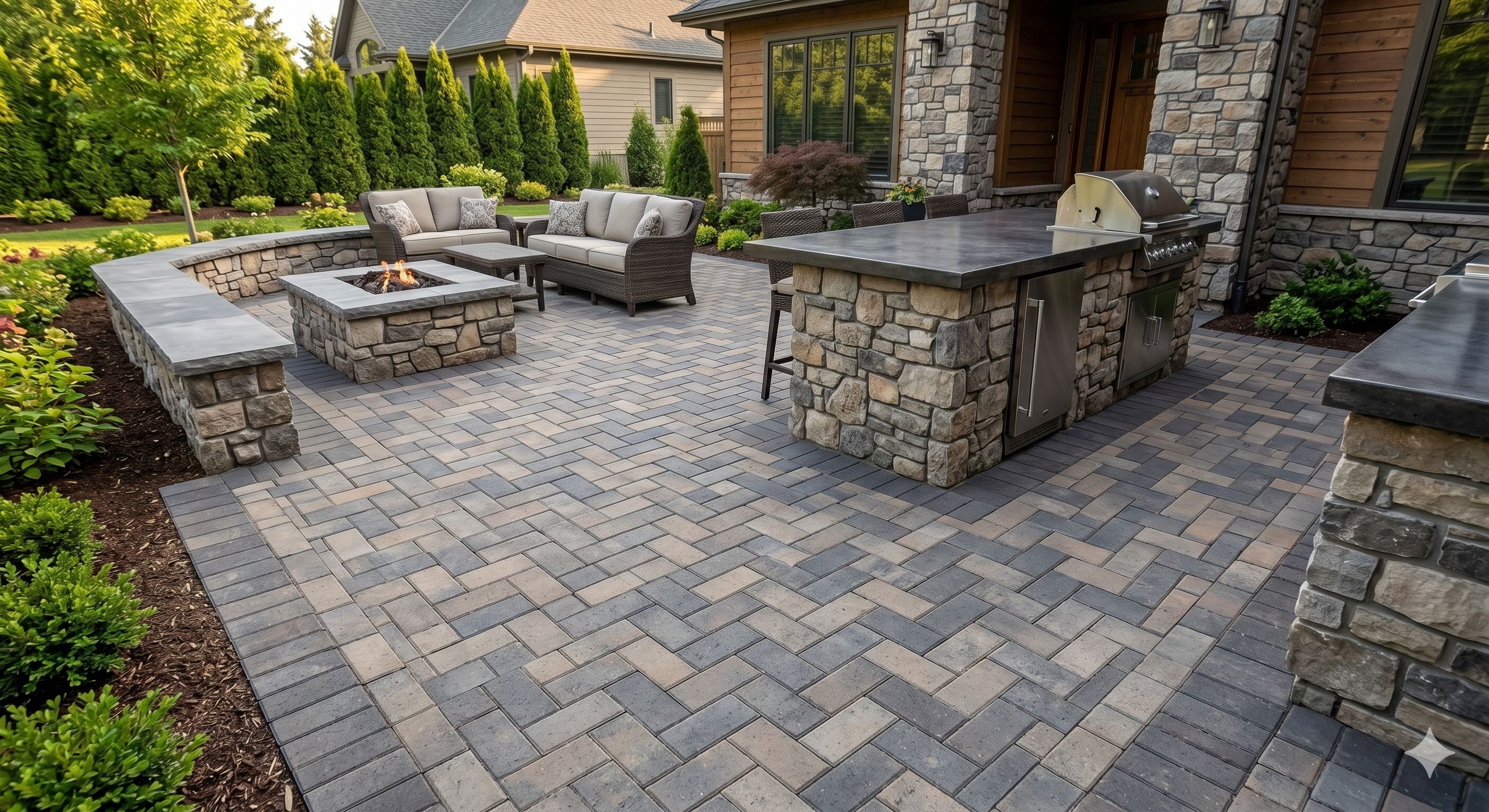
A well-designed outdoor living space can completely change how you use your home. For Rhode Island and nearby Massachusetts homeowners, the right patio, walkway, fire pit, retaining wall, or hardscape layout can turn an ordinary backyard into a comfortable extension of the house.
But outdoor living in New England requires more than attractive materials. Your project needs to handle heavy rain, freeze-thaw cycles, humid summers, winter snow, coastal moisture, drainage challenges, and regular foot traffic. That means every successful design starts with structure, grading, base preparation, and material selection.
This guide explains how to plan an outdoor living project that looks great, functions well, and holds up over time.
Start With How You Want to Use the Space
Before choosing pavers or stone colors, think about how the space should work. Do you want a quiet patio for family dinners, a fire pit area for gatherings, a walkway that connects the driveway to the backyard, or a full hardscape layout with seating walls and steps?
Clear priorities help determine the right size, layout, traffic flow, and features. A patio designed for outdoor dining needs different clearances than a compact sitting area. A fire pit requires safe spacing and durable surrounding materials. A sloped yard may need retaining walls or steps before the patio can be installed properly.
Choose Materials Built for New England Weather
Rhode Island properties experience a tough mix of weather conditions. Pavers, natural stone, concrete, block, and masonry products all perform differently depending on installation method, drainage, and maintenance.
Interlocking pavers are popular because they offer design flexibility and can move slightly during freeze-thaw cycles without cracking like one large slab. Concrete patios can be practical and clean when poured over a properly prepared base. Natural stone creates a premium look, but it must be installed with attention to slope, jointing, and long-term stability.
The best choice depends on budget, design goals, property conditions, and how much maintenance you want to manage.
Do Not Ignore Drainage and Grading
Drainage is one of the most important parts of any outdoor living project. A patio should move water away from your home, not toward the foundation. Walkways should avoid low spots where puddles collect. Retaining walls should include the correct backfill and drainage strategy to reduce pressure behind the structure.
When drainage is treated as an afterthought, outdoor spaces can settle, shift, crack, or become uncomfortable to use. Proper excavation, compacted base material, slope planning, and drainage installation are what separate a long-lasting hardscape from one that starts failing after a few seasons.
Add Features That Make the Space More Useful
Outdoor living spaces work best when every feature has a purpose. A fire pit creates a natural gathering area. Seat walls add structure and extra seating without clutter. Masonry steps improve access on sloped properties. Walkways guide movement through the yard. Retaining walls can create flat, usable space where the grade would otherwise limit the design.
These features should feel connected, not scattered. A cohesive layout makes the backyard easier to use and more visually polished.
Think About Long-Term Maintenance
Every outdoor surface needs some care, but smart construction reduces future headaches. Pavers may need periodic joint sand maintenance. Concrete should be monitored for cracks and sealed when appropriate. Stone and masonry may require occasional cleaning or repointing depending on exposure.
Choosing durable materials and installing them correctly from the beginning is the best way to protect your investment.
Work With a Local Hardscaping Contractor
Local experience matters. A contractor who understands Rhode Island soil conditions, coastal moisture, winter weather, and common grading challenges can help design a space that is both attractive and structurally sound.
Mota Masonry & Construction builds outdoor living areas, patios, paver driveways, masonry features, retaining walls, steps, concrete surfaces, and custom hardscaping across Cranston, Providence, Warwick, Newport, Narragansett, East Greenwich, Fall River, Dartmouth, and nearby communities.
If you are planning an outdoor living upgrade, our team can help you choose the right materials, layout, and installation method for a space built to last.